
By Denivia Rivera
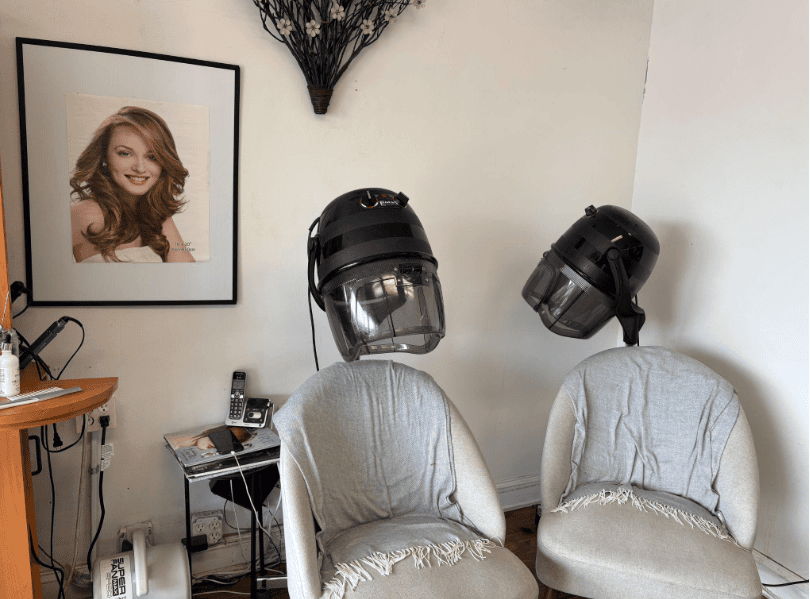
Empty salon chairs, nail polish bottles sitting on shelves, untouched blow dryers, combs and hair scissors. This is the reality for many local beauty service businesses in Uniondale and Hempstead Village.
Over the last year, U.S. Immigration and Customs Enforcement’s presence has increased nationwide. Many individuals — especially those in the Hispanic community — have been directly or indirectly affected by the deportations taking place. ICE actions have impacted many aspects of communities, particularly small businesses.
Hempstead ranks second on Long Island for Immigration and Customs Enforcement arrests this year, with 277, according to Newsday. Data was unavailable for Uniondale.
“If we understand how certain processes have worked through history, it’s affecting the most vulnerable people. Eventually, it will be knocking on everybody’s door,” said Nelson Hernandez, business owner and community member in Uniondale and Hempstead. “There’s a cause and effect. So it’s going to affect all communities drastically, and that’s why we need to call all communities to do something about it because this is a nation of immigrants.”
Community members said they are afraid to leave their homes because of the large number of arrests and deportations taking place. In turn, business owners reported seeing a decrease in customers, especially those that provide services such as nail and hair salons. The decrease has a direct impact on how businesses continue to operate, and owners must adapt.
Katia’s Beauty Pro
Katia Rivas, owner of Katia’s Beauty Pro, said she has seen a significant decrease in the number of customers coming to her salon. ICE’s increased presence in Uniondale is a critical factor accounting for the decrease, according to Rivas.
“People are scared to be in the street. They hear that ICE is around here, and they want to be safe, so people are scared to come to the business,” Rivas said. “Before, we were doing very good. People were coming here, but now [ICE’s presence] has affected the business a lot.”
The salon has been at its current location for 30 years, and Rivas was an employee of the former owner. Rivas opened Katia’s Beauty Pro four years ago, offering hair and nail services. She works alongside three other women, all of whom have seen their business decline, which puts a financial strain on the salon.
“I’ve been in this country for over 30 years, and I’ve never had people as scared as they are right now,” Rivas said. “Everything now is more expensive. The product, the rent. The business here, there was another owner, and they sold the building, so now they raised the rent. Everything costs more money.”
Rivas said she is grateful for her long-time clients who consistently come to the salon.
“Thank God I’ve been in this business on Long Island for a long time, so I have a lot of long- time clients. They still come, so that helps,” Rivas said. “I think that’s why I can stay operating, because of those customers.”
Community members also said they have also noticed a decrease in the number of people visiting small businesses. La Tribuna Hispana’s advertising director, Dora Escobar, said workers and customers alike are afraid to travel to salons.
“You can go out and it’s hard to find a hair salon because a lot of the people that work in those services work with TPS, the temporary permission to work. They are afraid to go out because they are not sure, Escobar said. “I remember before the salon was crowded and you would have to wait long hours, but now it’s empty.”
Angela Sosa, an insurance client representative and community member, said the lack of income for small-business workers also affects the number of clients at salons. “The effect is twofold because not only were they employees of the place, but if they’re not earning and not going to work because they’re afraid to go, there’s no money to spend. It’s not a necessity, it’s a luxury,” Sosa said. “I don’t get it every month. A mani-pedi for a guy who doesn’t get anything done, we’re looking at what? Sixty dollars? For women, it’s over $100. So if you’re not working, or if you’re earning less money, you’re not gonna go and take care of those luxuries.”
Nail Obsession
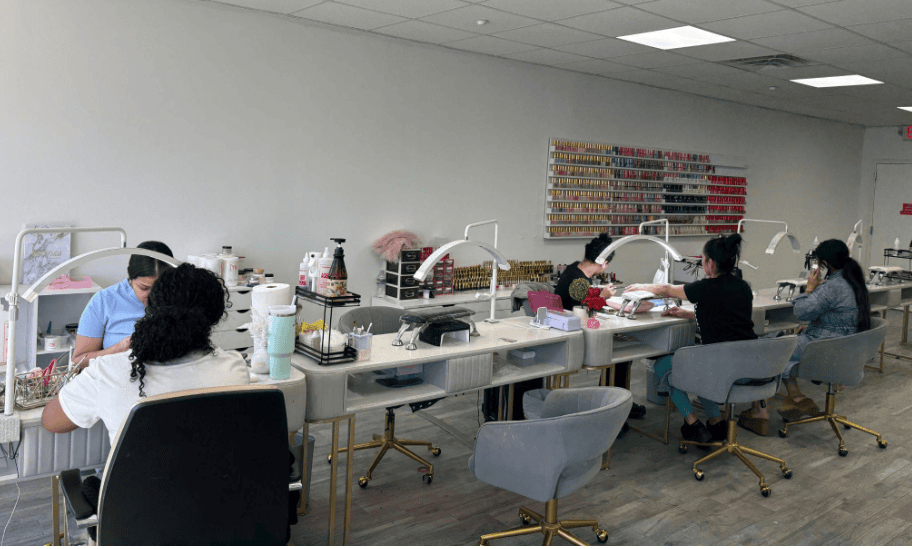
Many small businesses like Nail Obsession have had to make financial adjustments to support their business and personal needs.
Nail Obsession started as a family business two years ago. Co-owned by Cesar Esquivel and his mother, Katelyn Beltran, the salon began after Beltran worked many jobs. Esquivel said his mother previously worked in restaurants and cleaning jobs, and the nail salon was her opportunity to be her own boss.
“She’s always in the salon. She’s a hardworking person. She works like 12 hours every day,” Esquivel said. “I do the administrative stuff related to insurance, taxes, accounting, all that stuff. She’s in the front, dealing with customers and taking care of the business. Whatever needs to be done, she lets me know, and I take care of it.”
On the financial side, Esquivel said they have had to adjust to adjust to the decrease in revenue due to fewer clients. One aspect of this is increasing service prices to cover costs such as rent and product purchases.
“Less income means less money. For example, we had to put some expenses related to the business on credit cards since we don’t have the money to buy, let’s say, a new pedicure chair. So we have to put that expense on a credit card and pay it over time,” Esquivel said. “On the personal level related to our family, less income means the things we used to buy in the past, we’re not able to purchase anymore. We have to accommodate [expenses] related to our house and the expenses of our business.”
Not only are salons experiencing customers who are afraid to go out, but also employees who are fearful. Esquivel said when ICE’s presence first started to increase in the area, the salon had to lock the door during the day when doing business.
“Usually, we keep the door wide open so people can just come in and out. But at that point we had to lock the door and whatever customer wanted to come in, they had to knock on the door, and we would have to physically walk to the door, unlock it, let them in, and then lock the door
again,” Esquivel said. “People were scared that ICE would actually just come inside the nail salon.”
Rivera
The issue at large
Many community members have expressed issues with the way ICE carries out arrests. With Uniondale and Hempstead being home to large Hispanic populations, many people within the community say they have been ethnically and racially profiled and targeted. Nelson Hernandez said ICE’s actions have caused chaos in the community.
“What I have experienced in the last two months with the way that ICE has been attacking our communities — especially the business community — has been affected drastically because the fact that [ICE] has been in Hempstead almost every day, sometimes six, seven days a week, and then everyone is afraid of what’s going on here,” Hernandez said. “They’ve been racially profiling, because the fact that they see someone Hispanic working on the street, they just go ahead and ask for documentation, and if they don’t have the proper documentation, they take them and put them in jail and send them out to their countries.”
Community members said they are fearful of sharing their personal information because of what theybelieve are ICE’s unwarranted arrests. Hernandez said many businesses are not paying their taxes as a result.
“A lot of these businesses — 80% or 90% of them — they’re not doing [taxes] anymore because they are afraid that ICE will come to their house because they give their information,” Hernandez said.
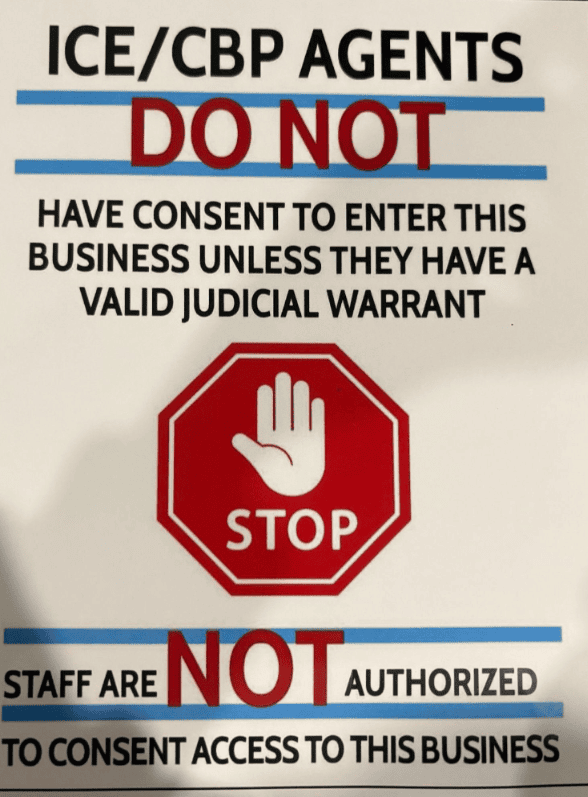
Hernandez has distributed posters among businesses that read: “ICE/CBP Agents do not have consent to enter this business unless they have a valid judicial warrant. Staff are not authorized to consent access to this business.”
The goal is to provide businesses with an extra layer of security, potentially protecting them from unwarranted ICE arrests.
Hempstead communities. // Photo taken by Denivia Rivera/Long Island Advocate during a community listening session February 2026.
Solutions
To combat the hardships many businesses are facing, many local business owners find open conversation helpful. Hernandez and many other business owners have held community meetings to discuss issues and concerns related to their businesses.
“We [small business owners] have met a few times, and we have a WhatsApp chat that we’ve been communicating on, talking about the issues that are going on in Hempstead,” Hernandez said. “We are informing each other.”
Hernandez said he has seen a decrease in ICE’s presence in the community in recent weeks. Despite this decrease, he said he still hears from business owners that they are struggling because community members are afraid to go out.
“We talk about how important it is as business people that we start organizing in a way that we have communication with elected officials,” Hernandez said. “We also communicate among each other.”
Some businesses and their employees have moved to working from home as a safer alternative to going into the workplace. Dora Escobar said she has experienced this new work alternative firsthand.
“A lot of these workers are good at their jobs. They have their customers. From my experience, I’ve had this lady for 30 years. She doesn’t have documents,” Escobar said. “One day I went for a pedicure, and I asked for her, and the lady said, ‘No, she’s not working here anymore.’ For more than 30 years, she was working.”
Because Escobar had known the woman for many years, she personally reached out to her for a pedicure. “I called her and went to her house, and she said, ‘Yes, I can do it for you,’” Escobar said. “That is the only way to survive.”
Many individuals – customers and workers alike – don’t feel safe enough to leave their homes. Working and providing services from the safety of their homes is an alternative to going into the workplace that may offer greater security while still allowing a profit to be made.