By Abigail Vorlicek
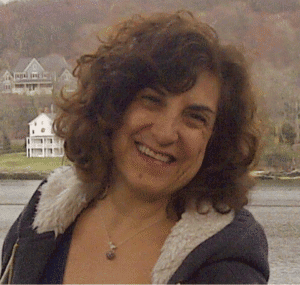
Francesca Maria Lorenzini, an independent reporter and producer, sat in her professor’s office at Columbia University’s Graduate School of Journalism in New York on the night of April 29, 2024, and into the early hours of April 30, watching news alerts that said police were coming to campus. She texted her peers, warning them that police were on their way as the students took over Hamilton Hall, which had been turned into a pro-Palestinian encampment.
“We didn’t know where the police were coming from. We were running from gate to gate,” Lorenzini said. She went outside and saw colleagues, unaware that 50 to 60 of them would be arrested.
Like many student journalists, Lorenzini has covered major events that have shaped her early career in the media industry. Interviews with students and faculty show that, despite safety concerns and professional pressures, many view access as essential to preparing future journalists for the demands of modern reporting.
Lorenzini came to the United States from Italy to expand her education and pursue a career in journalism. She enrolled in Columbia’s Graduate School of Journalism in August 2023 and graduated in May 2024.
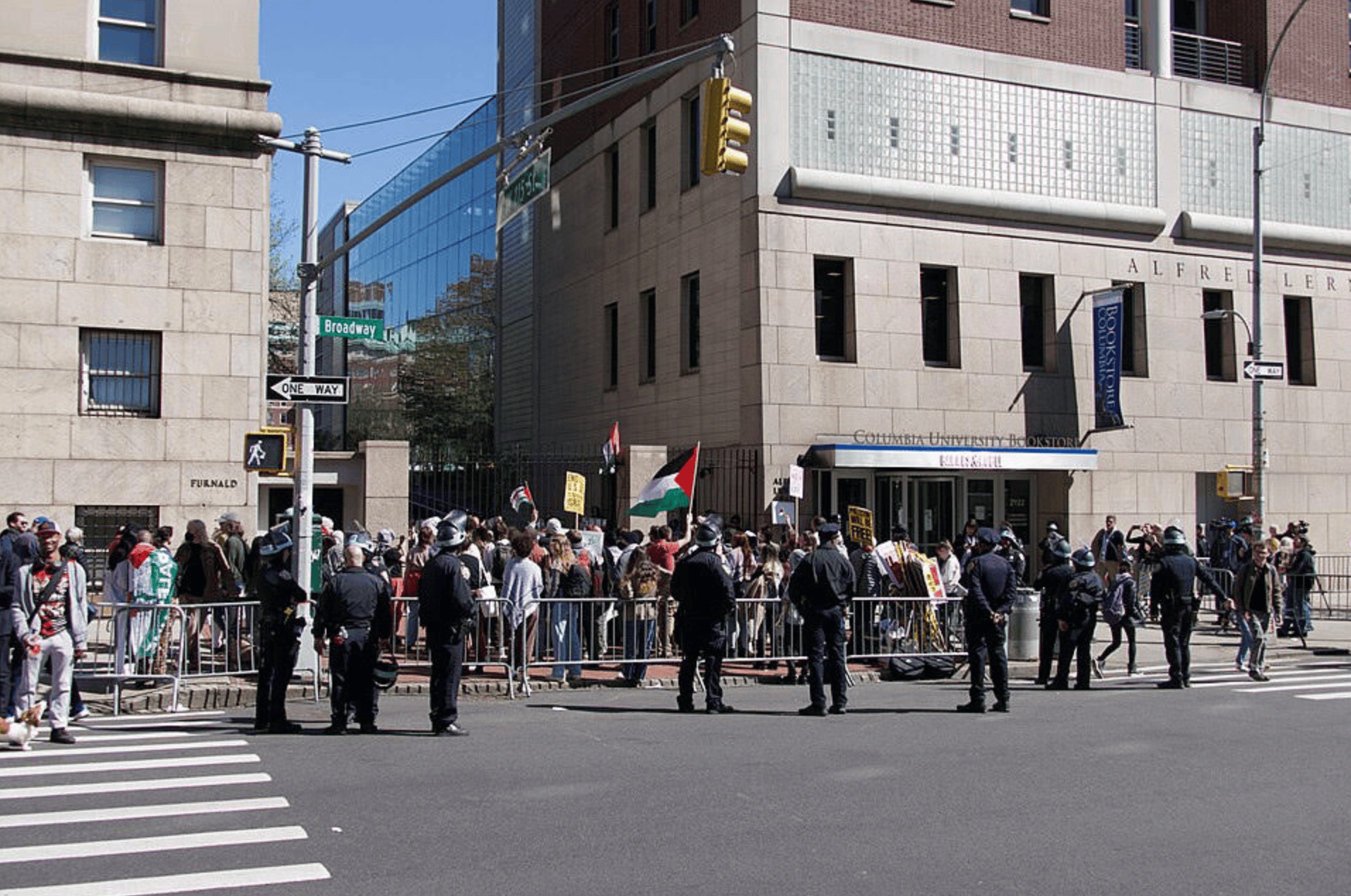
She explained that only journalism school students and members of the Columbia Daily Spectator, the second-oldest daily college newspaper in the United States, were on the grounds outside of Hamilton Hall, while news outlets were kept behind the gates.
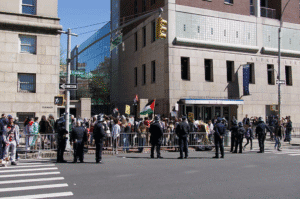
Earlier, on April 29, 2024, an agreement between Columbia’s administration and pro-Palestinian protesters to dismantle the encampment failed, escalating tensions and leading to arrests. Many of those arrested were released the following day, while others remained in custody longer.
“The University’s goal for the talks was a collaborative resolution with the protestors that would result in the orderly removal of the encampment from the lawn,” former Columbia University president Minouche Shafik said in a statement.
Lorenzini’s first breaking news coverage was eye-opening. It taught her how to be fast and be ready to report at a moment’s notice. It also taught her to recognize when she is doing too much and to take a break when needed.
“For a lot of people, it was our first real journalistic experience,” Lorenzini said. She said she had never seen so many journalists from around the world gathered in one place reporting outside her school.
A journalism career after graduation
Lorenzini moved to Amman, Jordan, in September 2024, landing a role as a video producer and video lead at The Jordan Times, an English-language daily newspaper. During her coverage of post-war experiences, she has traveled to Lebanon and the West Bank, and moved to Syria in May 2026.
“Working in the newsroom made me feel constrained. Now I am freer,” said Lorenzini about the high points of working as an independent journalist. “You can really pursue the stories you want to pursue and develop your identity as a journalist.”
She credits her newsroom experience with helping her develop valuable skills, but said being forced to write about certain topics can affect her passion for work. “You don’t work on them with the same passion,” Lorenzini said. “If something matters to you, you will do it better.”
As an independent journalist, she has struggled with how to manage tasks, from operating cameras and writing to getting the story noticed.
“It is tough emotionally,” she said.
Lorenzini describes how working in the Middle East could lead to self-censorship because the government monitors what is posted. She said she struggles to find the line between what is acceptable to report and what is not.
Being Palestinian at Columbia University
Self-censorship is also a struggle for a Palestinian administrator who worked at the university during the protests and spoke on the condition of anonymity because of conflicts that would put their personal and professional life at risk.
They studied international media at Columbia University, earning a master’s degree before moving to teach creative writing at Barnard College.
Although the administrator was not on campus the day of the arrests, they described the changes they observed on campus before and after the protests.
“I was afraid for my own safety,” said the source.
The source said they avoided talking about the war or protests during class because of their Palestinian background, saying they “kept the noise out of the room,” while also having students in the “eye of the storm.”
They said they had faced no direct backlash because of their writing, which focuses on Palestinians living in the United States who long for what “home” feels like. Besides the occasional hate comment, they are “certainly sure” their writing is being disparaged by many of those with different backgrounds.
For student journalists who may fear backlash when covering large, controversial events, the source offered this advice: “This is your world. If anyone’s going to cover this, it’s going to be students. You are the eyes on the ground, and it goes beyond campus life.”
A student’s dream job
Students working in media throughout college rely on all events to get a head start on their career goals.
Jordyn Oksenstein is a communications student at Long Island University Post in Brookville. After seeing her peers who went to LIU for communications earn a postgraduate role, she was inspired to follow in their footsteps.
“What really drew me in were the athletics teams,” Oksenstein said.
A lifelong fan of the New York Yankees and New York Rangers, Oksenstein currently manages the social media accounts for the school’s baseball and men’s ice hockey teams. She said it is exciting to work for her two favorite sports.
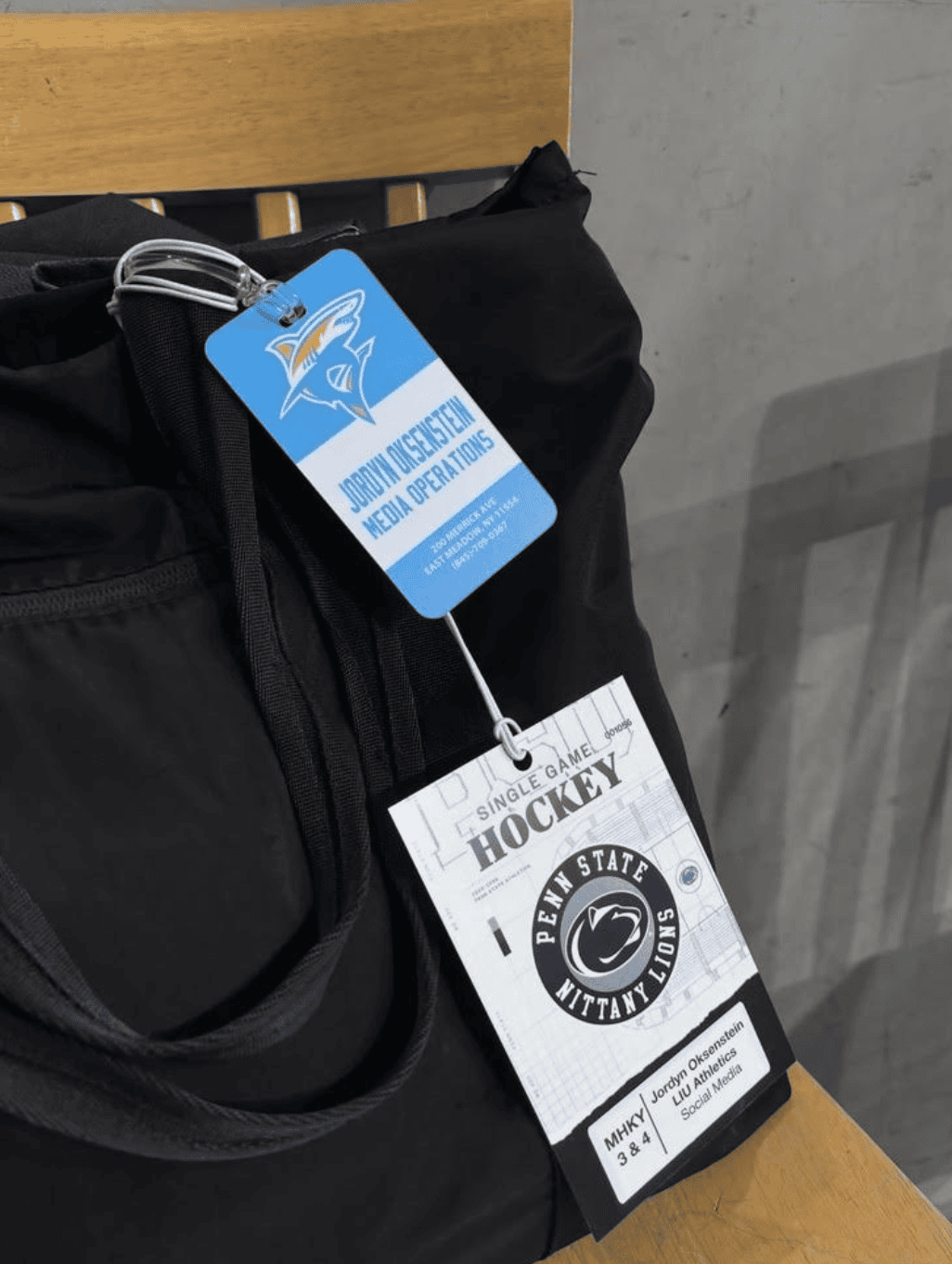
She recalled a trip she took with the men’s hockey team to Penn State University, where she spoke with coaches and stood on the ice. The staff handled the logistics, including hotel arrangements to credentials.
“It was a once-in-a-lifetime opportunity,” Oksenstein said. She recalls an epiphany she had: “I felt like, ‘Yeah, I could do this.’”
Larger institutions require specialized access to these hockey games. While traveling with the men’s hockey team to Sacred Heart University and the University of Connecticut, Oksenstein said she acquired a press badge to gain access to restricted areas.
“Once you have a badge that says your name on it, you’re clear,” Oksenstein said.
She also pursues photography in her free time, particularly at baseball games, a passion she developed while photographing her brother’s games growing up.
“Photos tell such an amazing story and give you such an insight into more than just the game,” Oksenstein said. “I think that it is more important to convey a message than words.”
How college will shape her future
Oksenstein said it is important to have the opportunity to cover major events while still in school.
She said she is grateful for the network she has created at 19. “Not only is it experience, a lot of the industry now is who you know,” Oksenstein said. “Five years down the line, I would not be where I am if I didn’t have access to what I have here.”