By Antonio Schoenhardt
Victor Alvarado, a financial adviser for Quan Medical PLLC in Hempstead, did not know where his patient was for a month. The man, who had a fractured tibia and was navigating the world on crutches, had vanished. Thirty days later, Alvarado’s phone rang.
“Hey, I’m in Belize now,” the voice on the other end said.
The patient had been swept up by federal immigration agents, shuffled through multiple detention centers across New York and then deported. He left behind a child who was placed in the state’s overwhelmed foster care system.
“Imagine that poor kid is going to grow up in a failed system because they don’t have all the resources,” Alvarado said. “That’s how sad it is.”
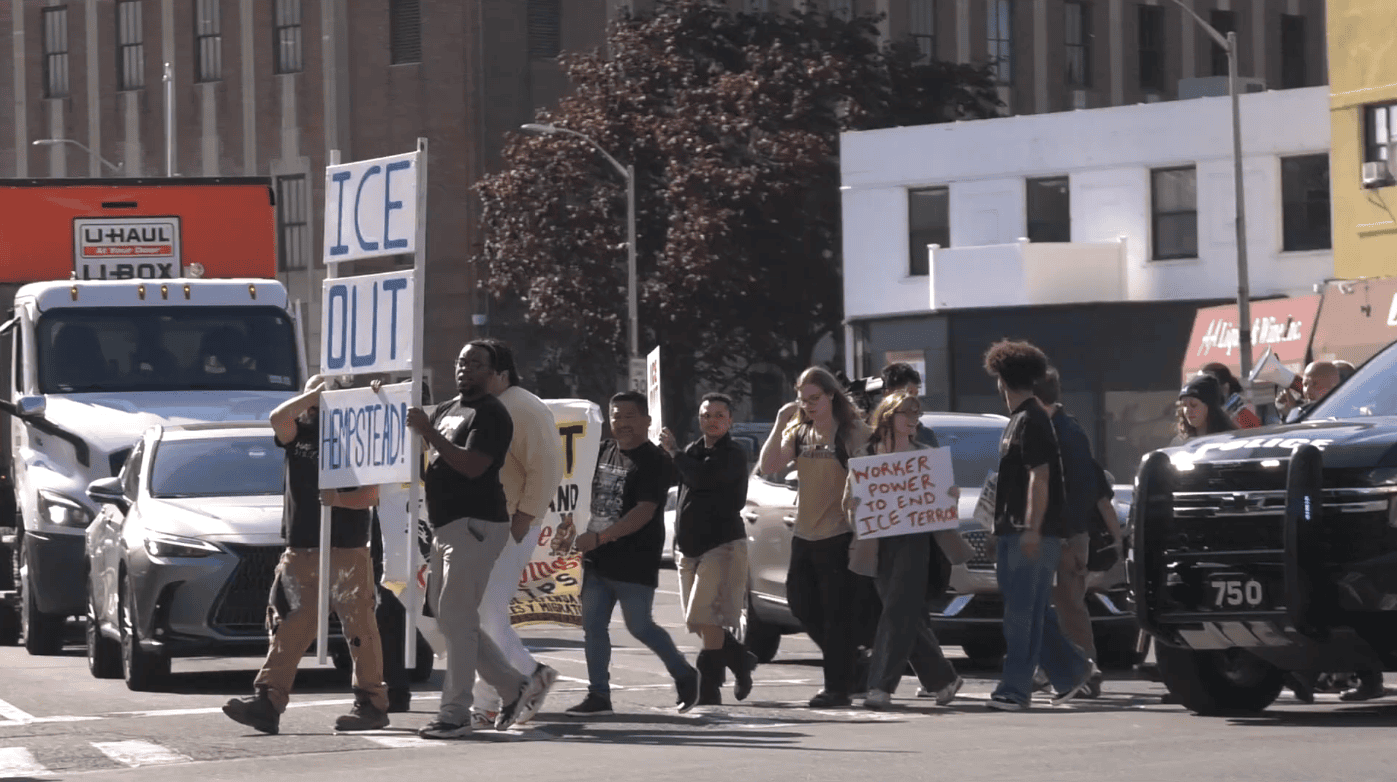
This was not an isolated incident. Across Nassau County, a reinstated and highly controversial partnership between local police and U.S. Immigration and Customs Enforcement has transformed vibrant immigrant enclaves into communities paralyzed by fear. What started as political outrage over federal enforcement policies has given way to something much heavier: a suffocating anxiety that is now playing out in the grocery stores, local bodegas and schools of Hempstead, Uniondale and communities throughout Long Island.
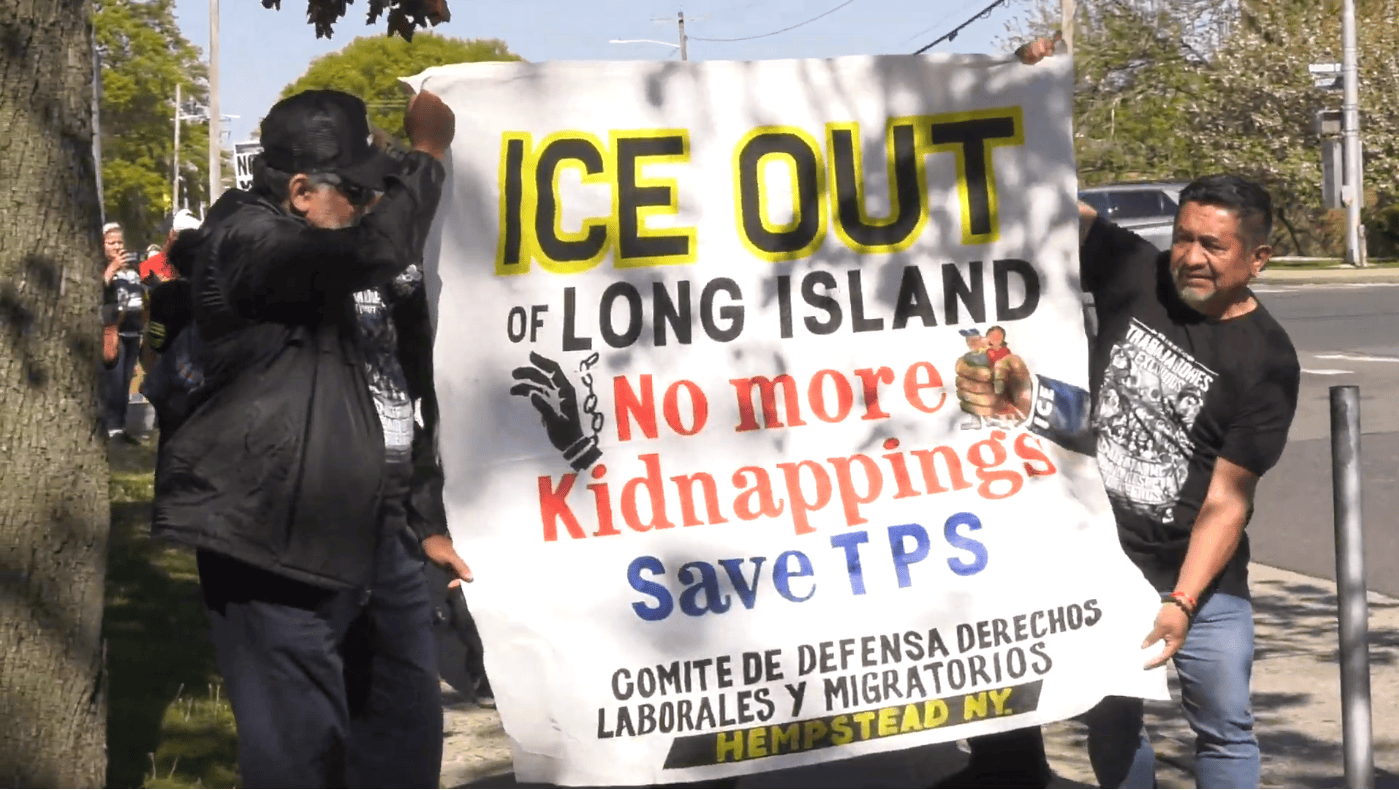
The demographic target
To understand the scale of the crisis, one must look at the numbers. Between the Village of Hempstead and the neighboring hamlet of Uniondale, there is a combined population of over 90,000 people, in the center of Nassau County. In Hempstead Village alone, nearly 50% of the population identifies as Hispanic or Latino, according to the U.S. Census Bureau. In Uniondale, that figure sits at over 40%. Across both ZIP codes, tens of thousands of residents are foreign-born.
According to data from Syracuse University’s TRAC Immigration project, the ICE New York field office, which oversees Long Island, routinely conducts thousands of arrests during periods of heightened enforcement, logging over 3,000 administrative detentions in a single year. Nassau and Suffolk counties consistently rank among the highest in the state for enforcement operations.
The demographics of those detained are overwhelmingly Central American, with immigrants from El Salvador, Honduras and Guatemala comprising the vast majority of administrative arrests on Long Island. For the many Latinos living and working here, ICE operations feel less like routine law enforcement and more like targeted racial profiling.
“They just look at your profile,” said Miguel Alas, a senior organizer for the Workplace Project in Hempstead. “Doesn’t matter if you speak English … If you just look Hispanic, then you are a target.”
Alas noted that the profiling is so blatant it has become a dark joke within the community. “They say, ‘Hey, you have the face of a pupusa.’ It shows that if you are Hispanic, then you are a target.”
Uniondale resident Angel Sosa echoed this sentiment, pointing out the double standard in how different immigrant groups are treated. “You see people from other parts of the world … from Europe, but they blend easier,” Sosa said. “No one talks about how they’re here only with some sort of permit. They’re not being chased down. They’re not following them.”
Sosa, a naturalized U.S. citizen, noted that legal status doesn’t act as a shield against the anxiety that follows him out of his driveway every morning. “If I drove my wife to the train station at six o’clock in the morning and I don’t take my wallet and I get pulled over, what proof do I have that I’m an American citizen?” he asked. “They’re gonna look at my face, they’re gonna hear my accent … That’s something that no matter what age, we’re all facing.”
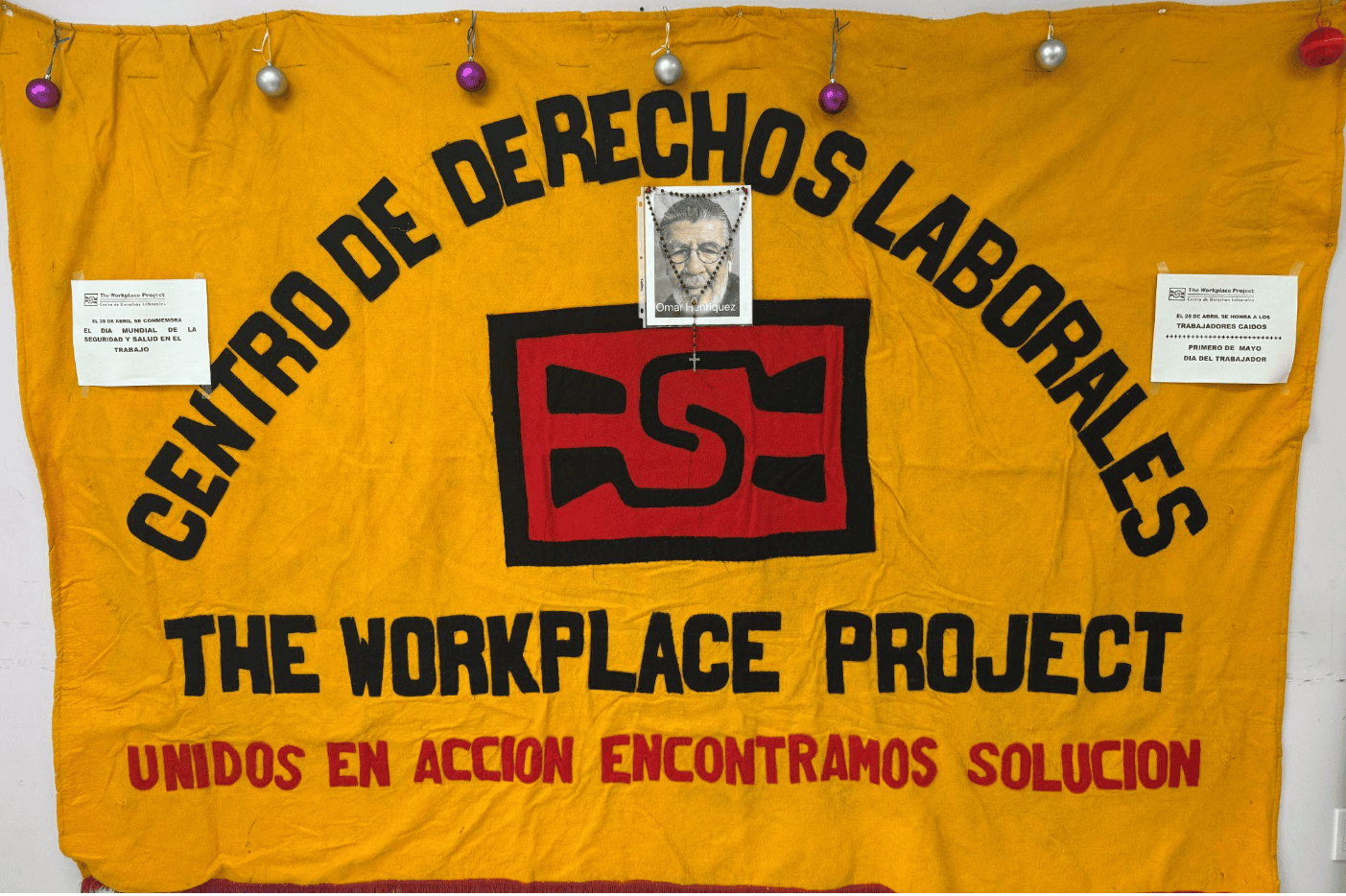
Economic ghost towns
When an entire demographic is too terrified to walk out their front doors, the economic engine of a neighborhood steadily slows. Bodegas sit empty, laundromats go quiet and landscaping trucks stay parked.
“You see the changes at the Latino restaurants, at the Latino supermarkets,” Sosa said. “We are the labor force in Long Island. We are the ones who cut the lawns. We are the ones who clean the toilets, the offices. We are the restaurant employees.”
For essential workers, daily life now requires calculated survival tactics. Sosa described a neighbor, a mother of two who works as a cook at a Mexican restaurant in Westbury. To avoid being targeted by ICE on the streets, she refuses to go to the supermarket. Instead, she pays a premium for an unregulated ride-share driver to fetch her groceries. “She leaves the job and then she takes the bus and she says all she can do is pray to God that she makes it safe to work,” Sosa said.
Melanie Creps, executive director of the Central American Refugee Center (CARECEN) in Hempstead, has watched this community survival network fracture. Her organization, which has provided mental health counseling, food assistance and legal defense 40 years, is seeing an unprecedented drop in the number of local immigrants seeking help.
“We were just talking to a local food bank where they had on average a hundred people coming every Tuesday. Now they’re having an average of 20,” Creps said. “The drop in leaving your house to get those needs met is measurable at this point. It’s a significant change because of what is happening with ICE.”
Dora Escobar, a local community leader and advertising director for La Tribuna Hispana, has witnessed this economic fallout firsthand. “I remember the salons were crowded and we had to wait long hours over there and now nothing. Empty,” she said.
The detention maze
While the federal government often justifies rapid enforcement sweeps by claiming they protect American jobs, advocates argue the tactics contradict the talking points.
“If that was the case, they would start going after the CEOs of the companies,” said removal defense attorney Arturo Vasquez. “But they focus on the little people, not on the higher-ups.”
Nick Perry, a former assistant general counsel for immigration enforcement at the Department of Homeland Security with 28 years of federal experience, said the system is fundamentally broken. “The system is overwhelmed and I think parts of the system — I know inside information on that — but it seems they’re trying to hide people,” Perry said.
Today, more than 90% of ICE detainees are held in facilities operated by private, for-profit prison corporations. “They’re billing the government for the transportation and then they’re checking in this person for all the health checks and mental checks in this new facility,” explained immigration attorney Renata Castro. “This is a way to churn revenue more than anything.”
Both Castro and Perry dismiss the common public refrain asking why undocumented immigrants do not “get in line” to enter the country legally. “Congress has limited who can obtain status and you have to meet certain specifications and if you don’t, then you’re out of luck,” Perry said. “We would need a very different legal structure for a significant number of people to quote ‘get in line.’”
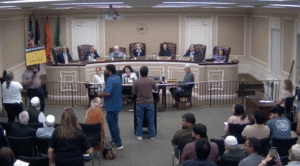
“Bottom line, our community has to go out and vote,” Escobar told a crowded room of residents during a listening session this past spring, sponsored by The Long Island Advocate. “They say, ‘Oh, whatever is Republican, Democrat, I don’t care. If I don’t work, I don’t eat.’ But it is part of our community leadership to start educating our community — go out and vote.”
It is a grueling fight against a system that residents say abuses and attempts to dispose of them. But there is a fierce grassroots network refusing to back down. “Necessity is the mother of invention, right?” Sosa said. “And the one thing that we Latinos have is the desire to survive.”