By Kumba Jagne
Mr. Hood, who asked that his first name be omitted for this story, got involved with the Bloods, a nationwide gang notorious for wearing the color red, when he was 12 or 13. None of his friends deterred him from getting involved with gangs while he was growing up in Uniondale and other villages on Long Island. He later became a “big homie,” directing the movements of other Bloods members at seven jails. As he entered adulthood, he was incarcerated for armed robbery and sent to prison for four and a half years.
Hood is now 29. He currently lives in Pennsylvania and is training to be an aviation medical courier to transport organs and medical supplies to facilities that need them. Wondering what his life would be without the Uniondale-based non-profit STRONG (Struggling to Reunite Our New Generation) Youth, he said, “I don’t know.”

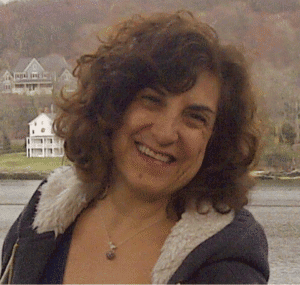
Mr. Hood is training to be an aviation medical courier, a pilot who transports organs and medical supplies to facilities. He was involved with the Bloods, but no more.
Hood started with STRONG Youth as a teenager after assaulting a group of Trinitarios gang members alongside other Bloods. He was once arrested in STRONG Youth’s Uniondale office while trying to evade police. Throughout his time in the Bloods and cycling in and out of prison, STRONG Youth was there for him, he said.
“I was scared, nervous, felt like I didn’t have anybody, but STRONG Youth was always different,” Hood said. “They even came to see me while I was in prison. Can you believe that they took their time out to check on me?”
STRONG Youth and other organizations in Uniondale and Hempstead are dedicated to reducing the number of youth who join gangs, giving them outlets to leave gangs and curbing deaths by gun and gang violence.
STRONG Youth has offices spread across Long Island. Primarily, the organization runs STRONG Youth chapters and STRONG University. Chapters deters at-risk youth from gangs and other dangerous situations with one-on-one mentorship and group activities. University is for youth in a justice-involved scenario, for example reintegrating into society after being incarcerated. It provides a safety net for re-entry.
Natasha Atkins, a social worker and executive director of STRONG Youth since February, wants to help build a research-based organization. She envisions teaching high school students to cite research that explains what is happening to their bodies and minds as they move through adolescence. The science says, she explained, that building environments in line with how young people operate is more effective than punishment.
“They’re coming from spaces that are literally trauma,” Atkins said. “Then their brains and their bodies are responding as such, so demonizing them and penalizing them isn’t what science is telling us to do.”
Hempstead non-profit aims to reduce gun violence
SNUG (Should Never Use Guns) operates in Hempstead under the Family and Children’s Association, with funding from the New York State Division of Criminal Justice Services. The organization has a team of outreach workers who meet one-on-one with young people ages 14 to 26 to deter them from gun violence. Community members, school officials, parents, probation workers and current clients can refer high-risk youth to the program.
Once individuals are part of the program, OWs create action plans for them that may include employment, education resources, mental health support and group therapy.
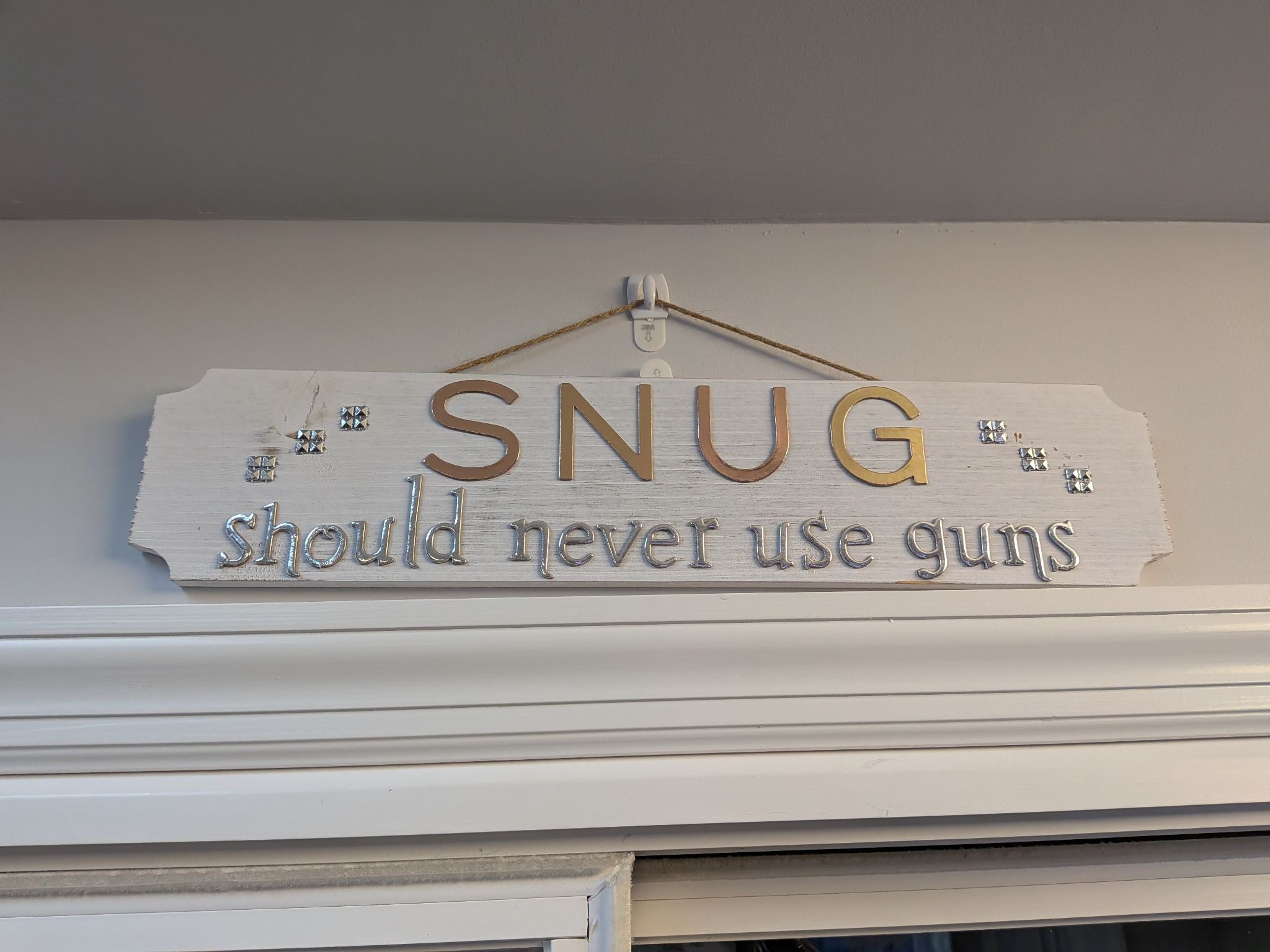
The SNUG center is a safe haven for the individuals who need it. They receive free haircuts, produce music in the recording studio and have a safe place to hang out. // Photo by Kumba Jagne/Long Island Advocate
When there is an instance of gun violence, the OWs and program manager rally at the scene and provide support by talking with community members. OWs are trained in Stop the Bleed, trauma system therapy, first-aid and motivational interviewing.
Firearms have been the leading cause of death among U.S. children and teens since 2020, and in 2022 Black children and teens experienced a gun death rate 18 times higher than that of White children and teens, according to the Bloomberg School of Public Health at Johns Hopkins University. OW George Graydon saw this firsthand when his younger brother was shot and killed on New Year’s of 2014. He said he fell into a state of depression for years after.
Graydon has been to prison for guns and drugs and was labelled a gang member by police.
“At one point in time, I was contributing to some of the things that we’re fighting against now,” Graydon said. “Gangs, gun violence, that was things I was into when I was growing up, so I was part of the problem. Getting involved with [SNUG] was just to give back to my community.”
All the OWs and the program manager, Matthew Harris, have these lived experiences and use them to help participants. OW Donell Thompson explained that he had to relive his old ways so he and his client could step forward together.
Amid reliving traumatic experiences to help clients, OWs can receive counseling services from an in-house social worker. They also lean on one another for support.
“We try to be a brotherhood,” Harris said. “Brothers fight, brothers cry, brothers laugh. We go through it all. But our main goal is these young men and women that need our help.”
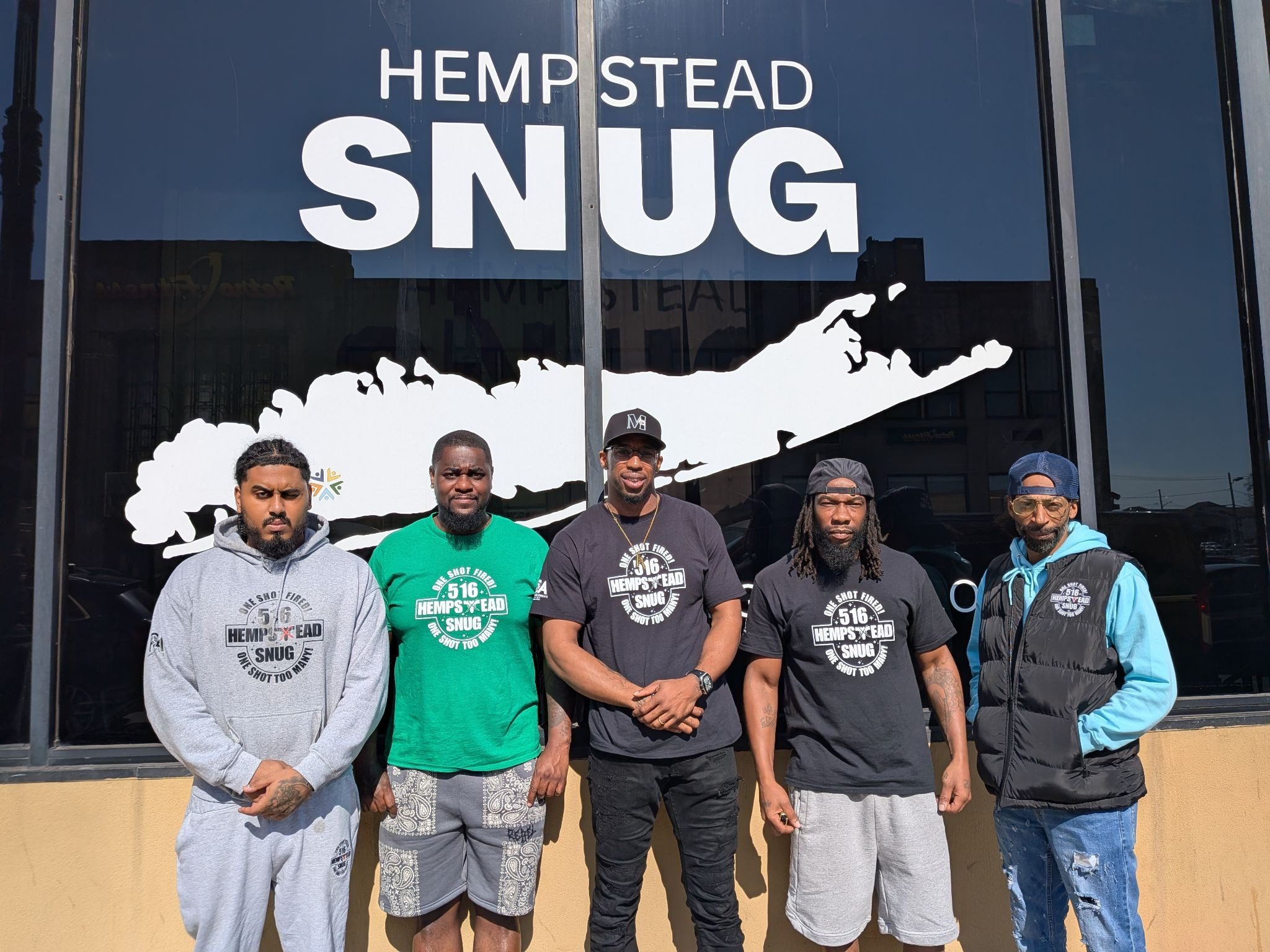
Francisco, Jerry, Matthew Harris, George Graydon, Donell Thompson lean on one another for support while working with their clients at SNUG (Should Never Use Guns).
Gang Activity in Hempstead
According to the Hempstead Police Department’s 2020 annual report, at least 14 gangs operate in Hempstead: Bloods, Crips, MS-13, SWP, Latin Pride, Latin Kings, ICG Crips, Parkside Gangsters, D-Block, Grape Street, Florilla, Trinitarians, Hells Angels and T-Block Boys.
Hempstead’s Gang Unit within the police department has eight detectives who focus on deterring gang activity. School resource officers call in parents to notify them that their children may be involved with a gang. Schools can intervene as well, occasionally separating students or staggering their start times and providing counseling.
Although it is difficult to track the level of gang activity in Uniondale and Hempstead, there are signs. Earlier this year, five people were arrested in Hempstead as part of a gang takedown. Last year, five alleged MS-13 members were arrested.
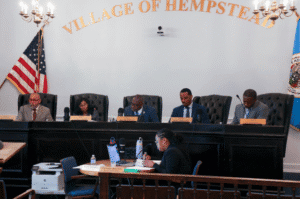
Village of Hempstead Mayor Waylyn Hobbs said he does not see gang activity as a major issue, though. Gang activity “is not a primary problem,” Hobbs said. “I’ll say that maybe it’s 1 or 2 percent of the quality of life issues that we might deal with.”
The Village of Hempstead runs the Police Activity League (PAL), which engages children ages 5 to 15 in afterschool sports and classes a few times a week to keep them off the streets. The organization offers cooking, sewing, girls flag football, chess and lacrosse, but the biggest program is track, at over 80 participants. PAL programs exist across Long Island.
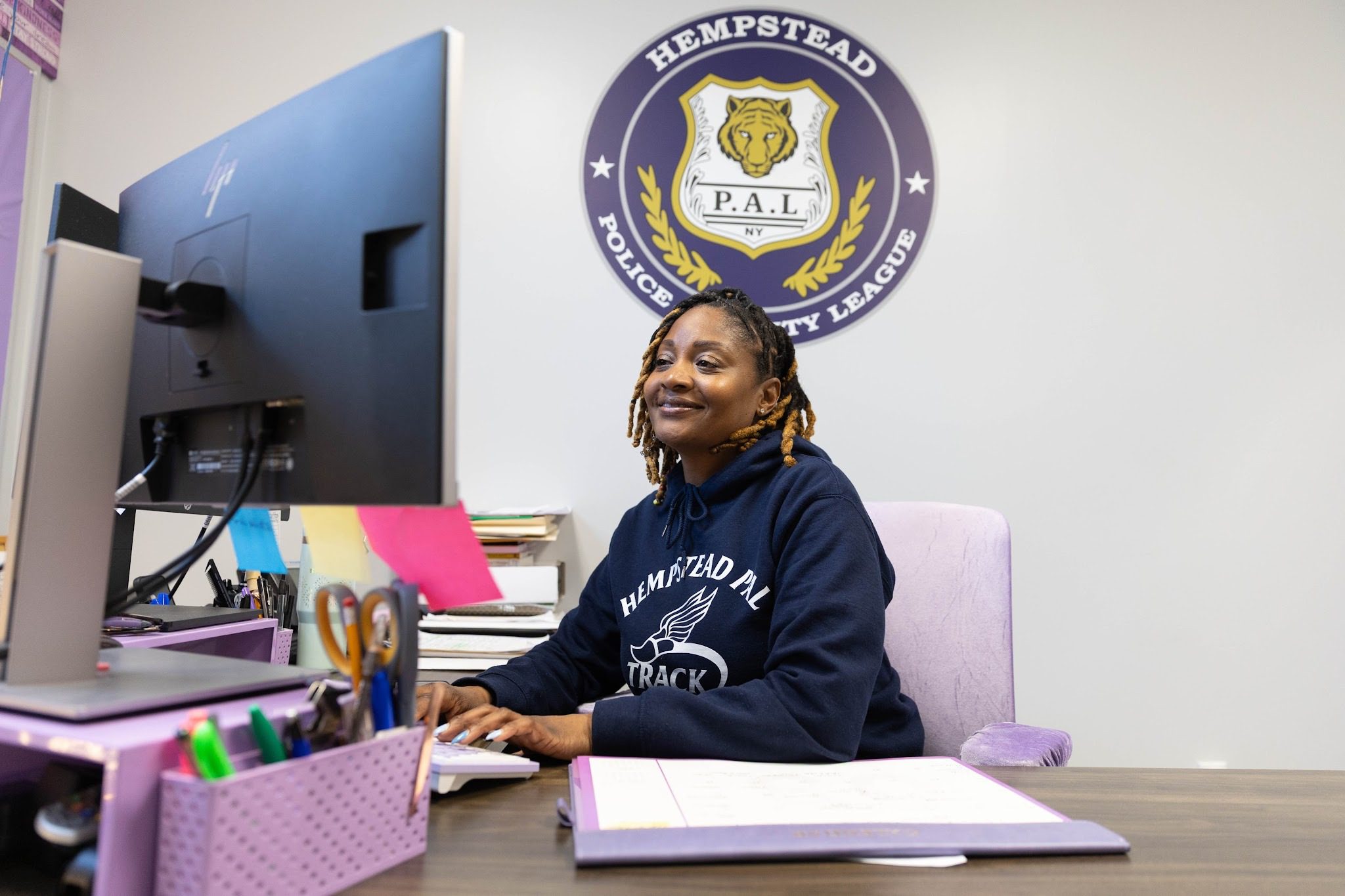
Even in her busy schedule, Sheryl Roberts, director of PAL, makes time to engage directly with children and parents.
“I focus on maintaining the children and making sure that they have something to do,” said Hempstead PAL Director Sheryl Roberts. “Gang activity, yes it is real out here, but I try to focus on getting my programs together to give any of the children the opportunity to join the program.”
Hood stressed how youth should not let others decide how they should live their lives.
“I’m dealing with all types of stuff that does not want me to progress in life, and I’m still pushing through because I know I got people behind me, like STRONG,” Hood said. “People that actually believe in me, so I’m not scared anymore. I don’t think anybody else should be scared. Chase your dreams, focus and be better.”